Context
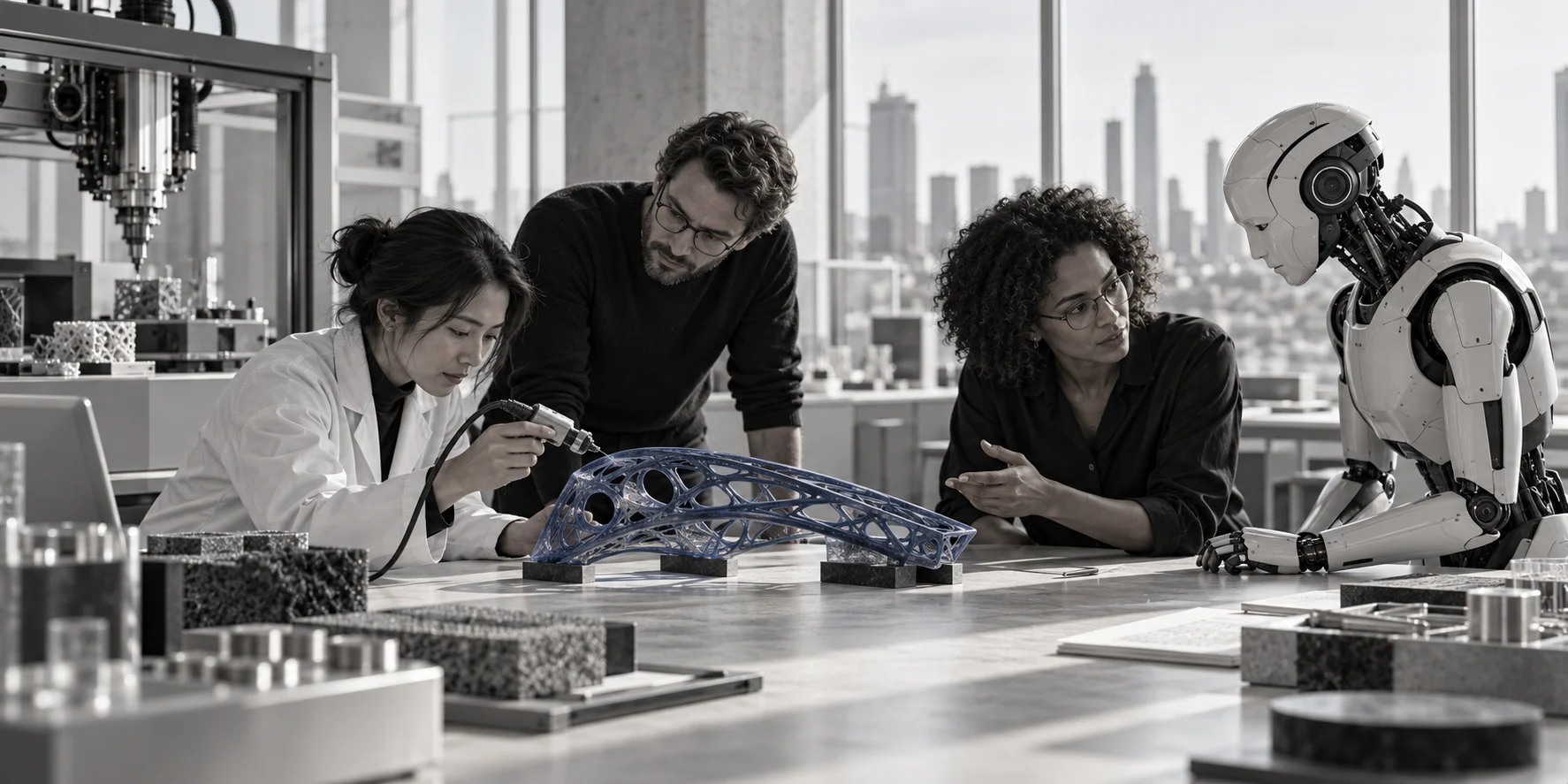
AI is accelerating progress in science and engineering at an unprecedented rate. The result will not only be improved versions of existing products; entirely new offerings are becoming feasible that were previously too expensive or technologically impossible to develop. We are approaching fully autonomous product development. Complex systems will be developed by networks of collaborating AI agents, with humans providing oversight, direction, and judgment rather than doing the work themselves.
From materials science and drug discovery to hardware and software engineering, the scope of AI’s impact on innovation is expanding rapidly. In hardware engineering, AI tools are already being used for customer insight research, design generation, simulation, and validation. In software, the gains are even more pronounced. The product and service development pipeline is being restructured around AI at every stage. One CEO at the 2026 Post-Industrial Summit noted that engineers are no longer expected to write code directly, but to accomplish their objectives by orchestrating AI agents.
As these capabilities mature, organizations must rethink how innovation is conducted. AI agents can be used to accelerate ideation, explore product-market fit, and develop new ventures. Product development systems themselves must be fundamentally redesigned to leverage AI agents across the entire pipeline. Scientific discovery becomes increasingly autonomous and decentralized, while development processes evolve toward AI-centric architectures. At the same time, new challenges emerge around intellectual property, data governance, and risk in AI-driven R&D environments.